01 / The opportunity
Why might someone buy this?
An independent, tested catch could offer more confidence than magnetic placement alone while preserving AIBI's interactive use. That advantage must beat the free alternative of correct magnet orientation and a $9.99 generic phone lanyard; no preference test has been done.
Who might need it?
- Frequent AIBI Pocket wearers who use the included pocket or magnetic panel on a garment and want to keep the robot visible while moving outdoors.
- Owners who only use AIBI on a desk or store it powered off in luggage do not need this first product. Children and people who must avoid the supplied magnetic panel are not target users without a separate safety review.
AIBI's portability is part of its appeal: the manufacturer describes wearing it on clothing using a magnetic panel. The everyday worry is a small, expensive robot coming loose while the wearer is moving.
The evidence must be read carefully. The older first-hand fall account could reflect mounting orientation, not a recurring defect. The more recent owner posts show interest in added protection but are unbuilt concepts, and neither establishes the prevalence of real current drops.
02 / Existing solutions
How owners handle it today.
| Current solution | What it does | What remains |
|---|---|---|
| Included magnetic panel and wearable pocket ↗ | The manufacturer's setup lets an owner wear AIBI without adding another accessory; correct orientation matters. | The manual does not describe an independent catch if the magnetic joint separates. Whether correct fit already solves most concerns has not been measured. |
| Reorient the original necklace mount ↗ | A forum participant describes correcting the panel orientation after their own earlier drops. This is a free and important first check. | The account is historical and does not quantify release risk under proper current use; it may remove the entire need for a new accessory for many people. |
| Owner-sketched safety pouch ↗ | A May 2026 owner drew a carrying pouch intended to reduce fear of dropping an AIBI; a later sketch sought a less conspicuous wearable form. | Only a concept was shown, not a built or evaluated catch. The proposed extra magnet may duplicate the existing mount instead of providing an independent backup. |
What a better product would need to do
- First compare against correct manufacturer mounting. Build a second attachment path that is mechanically independent of the magnets, with no modification to AIBI.
- Preserve head rotation, touch, camera, microphone, vent and charger access after measuring current hardware and accessories; avoid pressure on fragile areas.
- Keep the catch short enough to limit drop distance while preventing uncomfortable swinging, garment damage and snag hazards; never claim a safety rating before testing.
- Show a visible, repeatable benefit over free correct setup and a generic tether before tooling a model-specific part.
03 / Research evidence
How strong is the evidence?
Opportunity type: Recent owner-proposed workaround and current wearable accessory gap
A 2024 owner reports two walking falls, but another owner suggests the mount may have been reversed. In May 2026 a different owner sketched a safety pouch, then a smaller wearable idea; seven and two likes were visible on those posts. Those two sketches share one author and do not represent two independent users or a working DIY design. The current manual still describes a magnetic attachment without a separate mechanical catch.
AIBI Pocket remains listed at $249. Its manual describes a magnetic garment panel and warns against its use by people with pacemakers. A 2024 owner reported two falls while walking; another owner suggested reversed mount orientation. A May 2026 owner discussed a safer wearable pouch and less bulky arrangement, but did not report testing it.
Some frequent wearers may value an independent mechanical backup. A soft open cradle could be more compatible with active use than a full enclosure, but that is a design inference and not a verified improvement.
Current fall frequency under correct mounting, exact AIBI geometry and revision differences, cradle retention, catch distance, garment clip strength, head and sensor clearance, snag/choking risks, comfort, realistic purchase interest and total addressable owners.
Selected evidence
HomeRobotHQ AIBI Pocket profile ↗
The indexed profile describes an available portable companion with a wearable pocket and current model context.
Checked: Editorial model context, not owner demand or attachment testing.Historical first-hand walking fall and orientation advice ↗
An owner reports two falls while walking. A following participant says they had only dropped AIBI when the necklace/pocket magnets were oriented incorrectly.
Post: · Checked: Historical self-report with a plausible mounting explanation; not a current incident rate or evidence that correctly installed units fail.Recent owner safety-pouch sketch ↗
An owner proposes a protective wearable pouch after worrying about dropped or lost AIBIs; the post displayed seven likes.
Post: · Checked: A drawing, not a tested DIY product. Mentions of other social-media incidents were not independently verified.LivingAI AIBI product manual reproduction ↗
The manual describes an inside-garment magnetic panel and includes a pacemaker warning; no separate mechanical backup is described.
Checked: Publication date is not displayed and this is a third-party conversion; the supplied current manual should be checked before product engineering.LivingAI current AIBI listing ↗
AIBI Pocket remains listed for $249 with a roughly two-week shipping estimate.
Checked: Listing is not installed-base, wearable-use or accessory-demand evidence; price and shipping may change.The first-hand fall report is from September 2024 and may have an orientation explanation. A different May 2026 owner proposed protective accessories; their May 13 and May 20 posts displayed seven and two likes respectively when checked, but both are from one person in one thread. Engagement cannot establish incident frequency, installed base or purchase intent.
Search interestFocused searches for AIBI falling from necklace, wearable pouch, safety strap and anti-drop accessories returned a historical owner fall report, recent owner sketches, the manual and generic tethers. No sourced search-volume estimate or reproducible Google Trends series was obtained on 2026-09-30. Proposed query phrases are unmeasured editorial hypotheses.
04 / Product design
How the product could work.
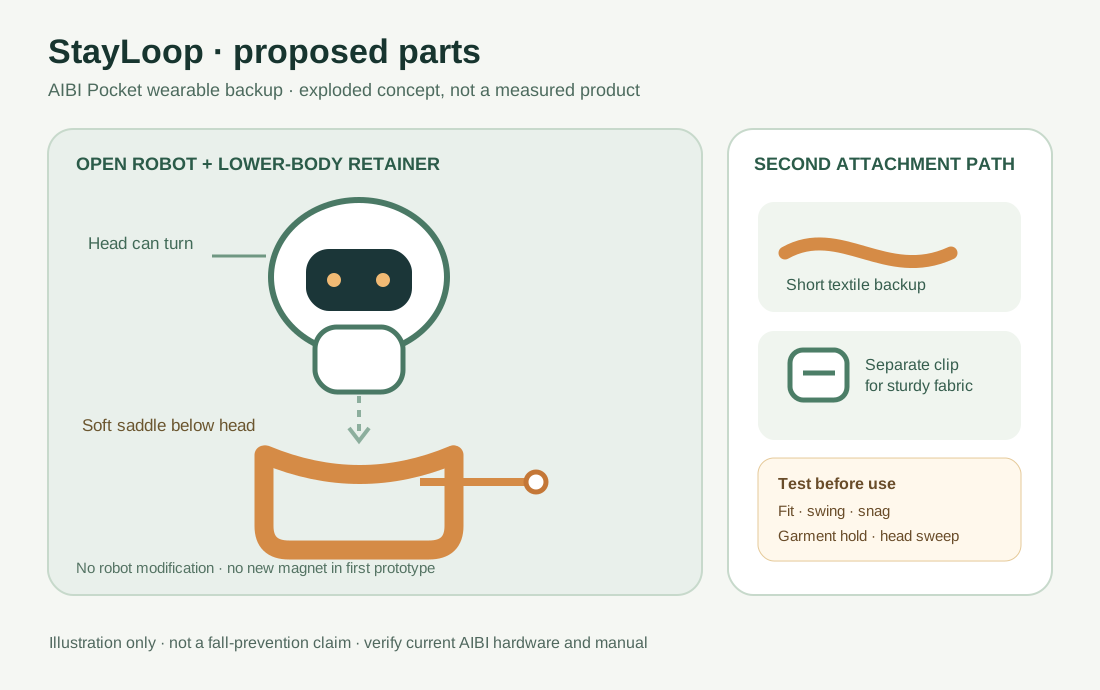
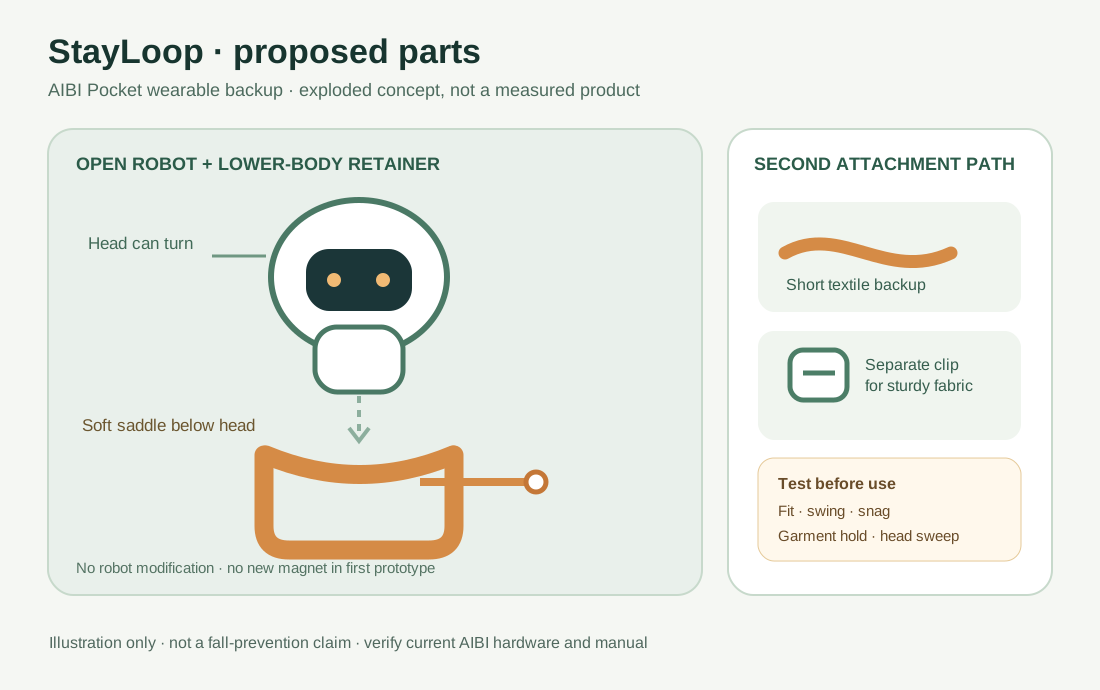
- Fit a measured soft saddle around the lower AIBI body, below its moving head. A rounded retaining lip and secure rear closure would keep the body in the cradle without pressing on its face, camera or controls.
- Wear AIBI with the supplied magnetic panel exactly as the manufacturer directs. Attach a separate, short textile backup to a sturdy garment seam or bag strap, not to the same removable magnet panel. Inspect the clip and movement clearance before walking.
- If the primary mount releases, the independent strap is intended to catch the cradle before AIBI reaches the ground. That event, attachment strength and wearer comfort must be tested with a dummy and inactive robot before any owner use claim.
Directions worth considering
Correct-fit guide
Benefit: Free, immediate and may resolve orientation-related falls without a product.
Tradeoff: It adds no independent mechanical catch if an otherwise correct magnetic joint releases.
StayLoop soft cradle and short tether
Benefit: Could provide an independent, low-profile catch while leaving the active robot open and visible.
Tradeoff: A precise fit, garment-safe clip and controlled release tests are necessary; untested hardware could create new hazards.
Full transparent wearable pod
Benefit: Could retain the robot more completely during movement.
Tradeoff: Likely bulkier and harder to ventilate; it may obstruct touch, sound, view or head motion.
Our recommendation: Prototype the soft cradle only after documenting whether correct use of the supplied mount actually releases in realistic scenarios. Compare the first cradle with a free orientation guide and cheap generic strap. Stop if there is no distinctive improvement or if any interference or snag risk remains.
Build the first version
A shallow, soft lower-body saddle with a tested retaining lip, short textile strap and an independent clip for sturdy clothing or a bag strap. Keep AIBI's head sweep, camera, microphone, touch areas and cooling path clear. No added magnets, electronics, full enclosure or child necklace claim.
Materials and production options
- Prototype a custom-fit TPU saddle with rounded contact surfaces, a stitched short polyester webbing loop and an off-the-shelf garment or bag-strap clip. Use adjustable printed pieces before committing to dimensions.
- If tests succeed, explore molded TPE or flexible polymer with a captive textile anchor and inspected fasteners. Material safety, lint/abrasion, sweat resistance, clip force and batch quality need actual tests and supplier quotes.
Prototype checks
- Measure a consented current AIBI and included wearable pieces, including full head sweep, camera, microphones, touch zones and power access. Map garment thickness and the correct orientation of the original mount.
- Test the supplied mount first on several garments and motion patterns. Prototype an adjustable saddle; use a dummy mass over cushioning for release tests before an inactive AIBI is placed in it.
- Record catch distance, clip slippage, cradle escape, swinging, snagging, comfort and functional obstruction. Compare with a no-cost fit guide and a generic tether where a safe attachment exists. Stop before live wear if any hazard cannot be controlled.
05 / Business assumptions
Could this support a business?
A narrowly fitted accessory might appeal to frequent outdoor wearers, but the number of such owners is unknown and a correct-fit tutorial could eliminate most need. A low price, small compatible audience, testing burden, returns and liability may leave no viable margin. No market size or unit economics was measured.
Price to test
$19 USD for a fitted cradle, short strap and clip is an unvalidated owner question. The included magnetic wearable setup costs no extra, and SP Connect listed a general phone-case lanyard at $9.99 on 2026-09-30. A dedicated accessory must demonstrate fit and a real backup advantage; the generic phone tag is not verified to attach to AIBI.
Costs still to verify
No quoted bill of materials, sewing/assembly, inspection, packaging, shipping, returns, insurance or customer-acquisition cost exists. A small model-specific audience may make tooling uneconomic; start with printed fit trials and sourced textile hardware before estimating delivered cost.
Where the first customers might come from
A useful AIBI wearable setup guide linked from the robot profile could reach owners investigating the included mount and ways to avoid a drop. Search phrases are unmeasured. Ask frequent wearers about actual past incidents before promoting the concept as a product.
06 / Next experiment
What should a builder test first?
The first decisive test: Measure a current AIBI and its official wearable parts. Establish a baseline using the correct mount orientation on several garments. Then test a dummy-mass cradle release over padding, followed by supervised inactive-AIBI release tests; compare catch distance, slippage and interference with the original mount and a safe generic strap alternative.
Next validation steps
- Ask frequent AIBI wearers about their last actual outing, garment, mounting method and any real release. Seek independent recent incidents rather than treating a single old forum post as prevalence data.
- With consented current hardware, compare correctly oriented stock mounting and the prototype in supervised dummy-mass and inactive-AIBI release trials. Measure catch distance, interference, garment damage and comfort.
- Show a safely tested physical sample and the $19 question to relevant owners. Treat an interest signup as stated preference, not a sale or a promise of protective performance.
What would make us drop this idea?
- Correctly worn current AIBI mounts do not release in realistic use and frequent wearers say they do not want extra hardware.
- The cradle blocks normal behavior or cannot catch a release without excessive swing, snag or garment damage.
- A safe generic tether or current official accessory achieves the same result more cheaply and conveniently.
- Qualified owners reject the $19 target after seeing a tested prototype beside the included mount and a generic alternative.
Practical risks to check before going further
- The original fall may have resulted from reversed magnets. Correct setup may make a separate product unnecessary.
- An ill-fitting cradle might press on AIBI's moving head, camera, controls or heat paths, or allow the robot to pop free under load.
- A tether may swing the robot into the wearer, snag on furniture or damage clothing. Neck and child-use risks require explicit limits and safety review.
- The manufacturer's manual warns people with pacemakers against its magnetic panel. No new magnetic accessory should be assumed safe; StayLoop is not medical or child safety equipment.
- The narrow audience, cheap generic tethers, returns and product liability may make the economics poor even if the mechanical prototype works.
Explore building this idea
Start with the prototype plan and compare it with the existing alternatives. The consumer page shows how the proposed benefit and price could be presented to owners.
Go to the prototype plan ↑View StayLoop for owners ↗07 / Sources and updates
How we reached this starting point.
Research method
Focused desk research on September 30, 2026 using the September HomeRobotHQ index, AIBI profile, a reproduced manufacturer manual, current LivingAI listing, owner posts with separate post dates and a generic tether listing. No AIBI was measured, worn, released or tested; no owner was contacted. Forum material was summarized without copying comments, usernames or images.
Post dates below refer to the underlying evidence; checked dates show when the source was reviewed. A recent check does not make an old post recent. Individual reports do not establish market size.
Source notes
- HomeRobotHQ AIBI Pocket profile ↗HomeRobotHQ · Checked
The indexed profile describes an available portable companion with a wearable pocket and current model context. Editorial model context, not owner demand or attachment testing.
- Historical first-hand walking fall and orientation advice ↗LivingAI owner forum · Post · Checked
An owner reports two falls while walking. A following participant says they had only dropped AIBI when the necklace/pocket magnets were oriented incorrectly. Historical self-report with a plausible mounting explanation; not a current incident rate or evidence that correctly installed units fail.
- Recent owner safety-pouch sketch ↗LivingAI owner forum · Post · Checked
An owner proposes a protective wearable pouch after worrying about dropped or lost AIBIs; the post displayed seven likes. A drawing, not a tested DIY product. Mentions of other social-media incidents were not independently verified.
- LivingAI AIBI product manual reproduction ↗Manuals+ reproduction of LivingAI manual · Checked
The manual describes an inside-garment magnetic panel and includes a pacemaker warning; no separate mechanical backup is described. Publication date is not displayed and this is a third-party conversion; the supplied current manual should be checked before product engineering.
- May follow-up proposes smaller wearable solution ↗LivingAI owner forum · Post · Checked
The same owner suggests a less conspicuous magnet-supported wearable arrangement; two likes were visible. Same author and thread as the May 13 sketch, not independent evidence. Its extra magnet may not create a true backup.
- LivingAI current AIBI listing ↗LivingAI · Checked
AIBI Pocket remains listed for $249 with a roughly two-week shipping estimate. Listing is not installed-base, wearable-use or accessory-demand evidence; price and shipping may change.
- LivingAI current store catalog ↗LivingAI · Checked
The checked catalog lists AIBI, Pocket Charger and DIY accessory downloads but no retail mechanical wearable catch entry. Focused catalog review cannot rule out all official or third-party alternatives.
- Generic small phone-case lanyard comparison ↗SP Connect · Checked
The US page listed the small tether for $9.99 and one retrieved snapshot displayed 163 reviews. The phone-case tag has no verified safe attachment to AIBI. Review count is not sales, AIBI demand or evidence of fall prevention for this robot.
Report updates
- : Initial unpublished research. Treated the 2024 fall as historical and possibly orientation-related; separated the May 2026 owner concept from a tested solution and from the earlier powered-off bag case idea.