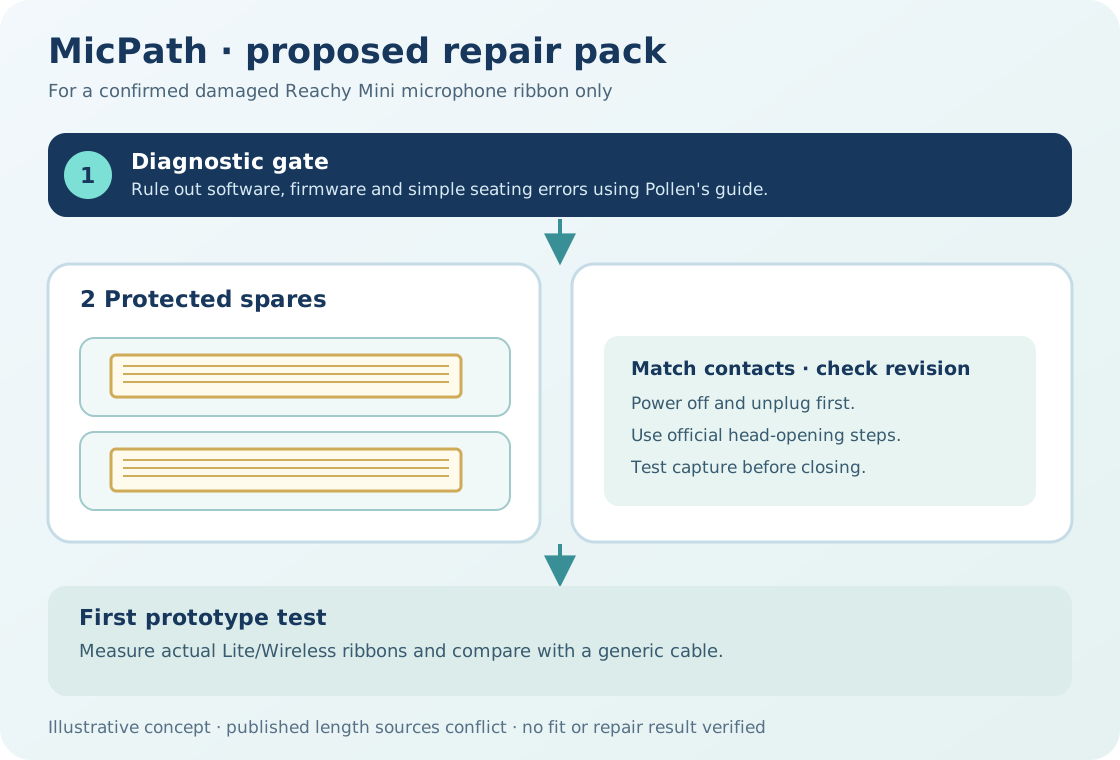
01 / The opportunity
Why might someone buy this?
A pack might remove cable-matching uncertainty and provide a protected spare. It must beat the official guide plus an inexpensive generic Farnell cable in clarity, delivery convenience and value.
Who might need it?
- Owners and maker-lab maintainers with a confirmed damaged microphone ribbon on a measured Reachy Mini revision. Current Lite and Wireless support is a test target, not an asserted compatibility claim.
- Owners whose microphone is silent for an unknown reason should start with Pollen's troubleshooting or warranty support; selling a cable before diagnosis could waste money or delay the right repair.
The four-microphone array is central to Reachy Mini's conversation uses, yet silent capture can follow a software, firmware, connection or physical fault. A replacement pack is useful only for the last, specifically diagnosed cable case.
The small flat ribbon is handled inside the head during repair. Pollen provides a tutorial and generic sourcing, but the founder question is whether exact-fit verification and protected spares improve the experience enough to justify a separate product.
02 / Existing solutions
How owners handle it today.
| Current solution | What it does | What remains |
|---|---|---|
| Pollen's free diagnosis and repair guide ↗ | Walks through update/restart, orientation checks and ribbon replacement when damage is suspected. | Does not make a silent microphone a confirmed cable fault; the owner still sources and handles the part. |
| Generic Molex replacement from Farnell ↗ | Pollen links an available same-side-contact 12-conductor cable; one-unit price was €5.93 before VAT on the check date. | The owner must verify the installed part and handle it carefully. This inexpensive route may be all that is needed. |
| Manufacturer support or warranty ↗ | Allows a technician to distinguish a defective cable from other failed audio hardware. A recent owner asked for this help and possible spares. | The checked public case has no confirmed fault or resolution; a self-service pack would not replace warranty help. |
What a better product would need to do
- Verify pin count, pitch, same-side contacts, length and bend path against physical Lite and Wireless units before stating compatibility; the live source set conflicts on length.
- Put a prominent diagnose-first gate on the pack and page. Never imply that replacing a cable fixes firmware, software, board or microphone-array faults.
- Keep ribbons flat and clean in ESD-conscious protective packaging, with a nonconductive handling method and clear contact-side reference.
- Compare outcome, ease, total delivered price and support burden directly with the linked generic cable and warranty path.
03 / Research evidence
How strong is the evidence?
Opportunity type: Explicit repair task and niche replacement-part opportunity
The current official guide specifies a replacement cable and careful head disassembly. One recent owner support case is cross-posted in two places and cannot be counted twice; it asks for spare ribbons but has no confirmed diagnosis or visible resolution. Firmware or other hardware can also silence the microphone. Accessory demand is unknown.
Reachy Mini is an available kit on HomeRobotHQ and Pollen's store. Pollen's current guide names wrong ribbon orientation or damage as possible causes of a silent microphone and describes replacement. Its English tutorial specifies 12 pins, 0.5 mm pitch, same-side contacts and 150 mm; the linked Molex listing describes 152 mm and showed €5.93 before VAT for one on October 7. A Seeed copy says 15 mm, so exact fit is unresolved.
A prechecked repair pack could reduce uncertainty for owners who have already diagnosed cable damage. One owner's request for spare parts suggests an occasion for the product, not a market size or proof their cable was faulty.
How many silent-mic failures are actually cable damage; Lite/Wireless and revision fit; whether kit contents already include a spare; whether the generic part is inconvenient enough to justify a pack; repair success, price acceptance and total delivered cost.
Selected evidence
Pollen live Reachy Mini troubleshooting ↗
Current guide directs update/restart, cable-orientation checks and replacement if microphone ribbon damage is suspected; other silent-audio paths exist.
Checked: Dynamic guide and manufacturer advice, not a count of confirmed cable failures.Pollen microphone-ribbon replacement tutorial ↗
Guide describes head opening, power-off repair and a 12-pin, 0.5 mm, Type A, 150 mm cable.
Checked: No project-specific fit or repair testing; Seeed mirror conflicts on length.Manufacturer-linked Molex cable ↗
Listing identifies a 152 mm same-side-contact 12-conductor 0.5 mm ribbon and displayed €5.93 before VAT at one-unit quantity.
Checked: Retail price and inventory may change; this is not a tested assembled MicPath product.Recent owner microphone support case ↗
An owner described silent capture despite reseating the ribbon and asked whether a cable spare or another warranty diagnosis was appropriate.
Post: · Checked: One self-selected case, cross-posted as GitHub issue 1425; the cable fault and outcome were not confirmed. A support reply is not purchase intent.One September 2026 owner case requested spare cables after extensive silent-mic diagnosis; the corresponding forum and GitHub posts are the same case. The current official guide documents the replacement task. Neither establishes failure prevalence, confirmed cable damage in that case or purchase intent. The robot's store listing is category context only.
Search interestFocused October 7 search found the current guide, generic component and recent support case. No reproducible Google Trends series or sourced search-volume estimate was available for this narrow query. Search phrases and HomeRobotHQ internal discovery are distribution hypotheses, not measured traffic.
04 / Product design
How the product could work.
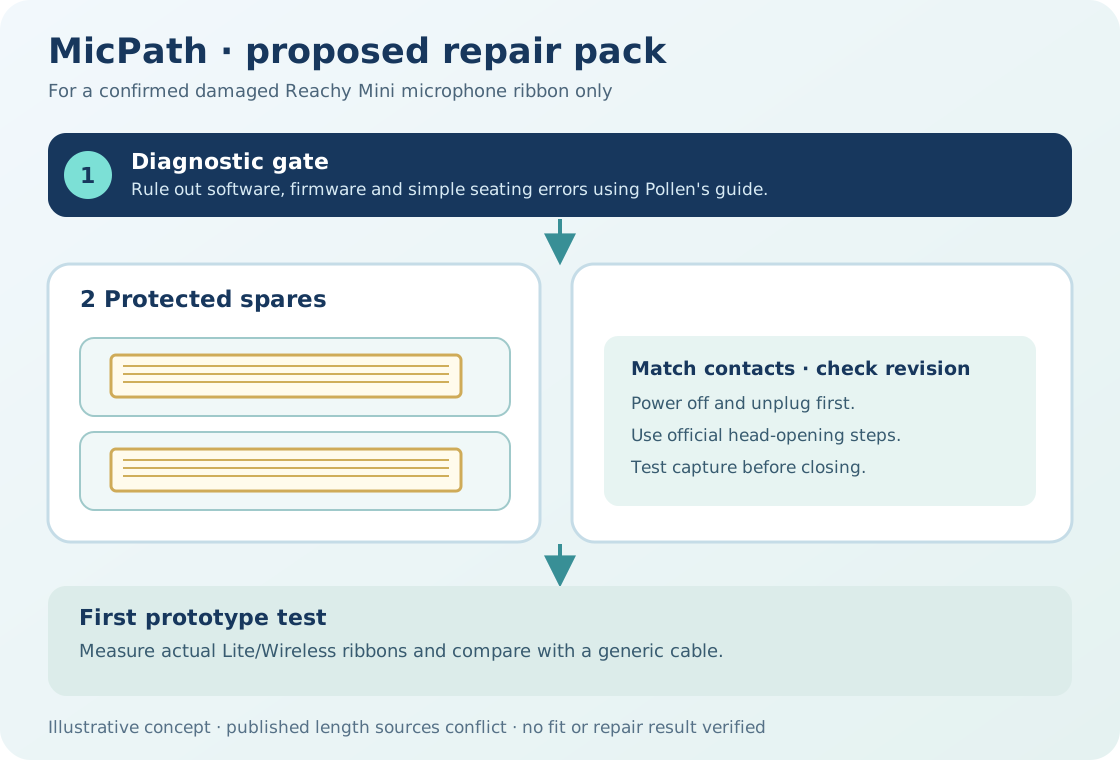
- First follow current Pollen troubleshooting: update and restart, verify capture settings and check the cable's orientation and seating. A silent microphone is only a symptom.
- Only when the ribbon is confirmed damaged, power off and unplug the robot, open its head using Pollen's tutorial, replace the ribbon and test capture before closing. MicPath would supply verified spare ribbons and visual contact-side guidance, not a new electrical circuit.
- The builder must resolve the conflicting 150 mm and 15 mm published lengths on physical units, validate cable route and connector pressure, and avoid any installation claim until repeated successful swaps are observed.
Directions worth considering
Printable orientation card
Benefit: Fast and free way to make Pollen's polarity instructions easier to follow.
Tradeoff: Mostly duplicates the official guide and has little separate paid value.
MicPath two-ribbon repair pack
Benefit: Could bundle a verified match, protected spare and clear model-specific workflow for confirmed cable damage.
Tradeoff: Generic cable is cheap; physical fit, willingness to pay and repair results are all unverified.
Molded head-service station
Benefit: Could hold a removed head cover and screws during frequent maintenance.
Tradeoff: Adds fit and tooling work before a need beyond the cable itself has been observed.
Our recommendation: Prototype the narrow two-ribbon pack and run a fit-and-repair comparison against Pollen's linked generic part. Publish it only as an unbuilt concept until measured; drop the product if generic ordering and the official guide are just as easy for the actual audience.
Build the first version
Two traceable, physically verified Reachy Mini microphone ribbons in bend-protective sleeves, a model/revision check card and a concise contact-side orientation card. No adhesive inside the robot and no conductive insertion tool.
Materials and production options
- First prototype: traceable same-side-contact FFC/FPC ribbons selected only after unit measurement, ESD-conscious flat sleeves, nonconductive handling tab and a printed model/diagnosis card. Avoid metallic tools near an energized board.
- Possible production: tested sourced cables, die-cut protective pockets and an offset-printed instruction card assembled in small batches. Supplier, inspection, safety and fulfillment processes remain unquoted.
Prototype checks
- Measure original ribbons from current Lite and Wireless units, including revisions if available. Resolve the Pollen 150 mm versus Seeed 15 mm conflict before any part order or fit claim.
- Use known-good and known-damaged cables to test the official power-off swap procedure, capture output, bend path and connector handling; record failures and any damage.
- Show repairers the actual pack beside the generic Farnell part and official guide. Observe which they choose, what mistakes occur and whether a protected second spare matters.
05 / Business assumptions
Could this support a business?
This is a very narrow repair-supply opportunity. The inexpensive generic cable and warranty support may be enough, while shipping and support could consume a $19 target price. No margin or installed-base repair rate is known.
Price to test
$19 USD is an unvalidated consumer price question for two verified ribbons and guide materials. Farnell displayed one generic reference cable at €5.93 before VAT on October 7; shipping, tax and local availability differ. The comparison must include delivered cost.
Costs still to verify
The €5.93 one-unit cable listing is a retail input reference, not a MicPath production-cost quote. No volume price, yield, inspection, packaging, shipping, fees, returns, support or acquisition estimate exists, so no margin can be inferred.
Where the first customers might come from
Owners searching for Reachy Mini microphone troubleshooting may find a useful diagnosis article linked from the HomeRobotHQ profile. A concept page can ask whether a confirmed-fault owner prefers a verified pack, but search volume and conversion remain unmeasured.
06 / Next experiment
What should a builder test first?
The first decisive test: Resolve the 150 mm versus 15 mm documentation conflict on actual Lite and Wireless units; perform supervised swaps and capture tests. Then compare an actual MicPath pack with ordering the generic linked cable among owners with confirmed ribbon faults.
Next validation steps
- Resolve the specification conflict on real Lite and Wireless hardware; document which revisions, if any, share one replacement cable.
- Compare repeated supervised replacement attempts with a generic cable versus the prototype pack, using the same official diagnosis and repair instructions. Record fit, insertion mistakes, audio capture and time without claiming efficacy in advance.
- Ask owners with confirmed ribbon faults which delivered option they would select at $19 and why. Treat waitlist responses as interest only, not sales or a representative market estimate.
What would make us drop this idea?
- Physical unit measurements show too many incompatible ribbon variants for an affordable, clearly labeled pack.
- Confirmed cable-fault owners find the official guide plus generic part equally easy and cheaper delivered.
- The pack or its handling instructions increase connector damage or do not improve successful repair outcomes.
- Confirmed repairers will not choose a $19 pack after seeing a single generic cable and support options.
Practical risks to check before going further
- A silent microphone can be caused by firmware, host software, connector orientation or board failure; a cable pack sold without diagnosis could be misleading.
- Published guide copies disagree on 150 mm versus 15 mm length; selling before physical verification could cause nonfit or connector damage.
- An inexpensive generic cable or manufacturer warranty service may make a specialized pack unnecessary.
- Small repair audience and low target price may not cover inspection, shipping, returns and support.
Explore building this idea
Start with the prototype plan and compare it with the existing alternatives. The consumer page shows how the proposed benefit and price could be presented to owners.
Go to the prototype plan ↑View MicPath for owners ↗07 / Sources and updates
How we reached this starting point.
Research method
Focused October 7, 2026 desk research of the indexed Reachy Mini profile, live Pollen troubleshooting and repair tutorial, a Seeed mirror with a conflicting dimension, the manufacturer-linked Farnell part, a September 2026 support case cross-posted on GitHub, and the current robot store. No robot or cable was measured or tested and no owner was contacted. Public user material was paraphrased without copying comments, names or images.
Post dates below refer to the underlying evidence; checked dates show when the source was reviewed. A recent check does not make an old post recent. Individual reports do not establish market size.
Source notes
- HomeRobotHQ Reachy Mini profile ↗HomeRobotHQ · Checked
The local indexed profile identifies an available kit with Lite/Wireless versions and a four-microphone array. Editorial context only; does not establish cable faults or demand for repair packs.
- Pollen live Reachy Mini troubleshooting ↗Pollen Robotics · Checked
Current guide directs update/restart, cable-orientation checks and replacement if microphone ribbon damage is suspected; other silent-audio paths exist. Dynamic guide and manufacturer advice, not a count of confirmed cable failures.
- Pollen microphone-ribbon replacement tutorial ↗Pollen Robotics / Hugging Face · Checked
Guide describes head opening, power-off repair and a 12-pin, 0.5 mm, Type A, 150 mm cable. No project-specific fit or repair testing; Seeed mirror conflicts on length.
- Manufacturer-linked Molex cable ↗Farnell · Checked
Listing identifies a 152 mm same-side-contact 12-conductor 0.5 mm ribbon and displayed €5.93 before VAT at one-unit quantity. Retail price and inventory may change; this is not a tested assembled MicPath product.
- Recent owner microphone support case ↗Pollen Community · Post · Checked
An owner described silent capture despite reseating the ribbon and asked whether a cable spare or another warranty diagnosis was appropriate. One self-selected case, cross-posted as GitHub issue 1425; the cable fault and outcome were not confirmed. A support reply is not purchase intent.
- Same owner case cross-posted to GitHub ↗Pollen Robotics GitHub · Post · Checked
GitHub issue records the same silent-microphone case before the forum post. Duplicate of source 4, never an independent owner report.
- Seeed tutorial mirror with conflicting cable length ↗Seeed Studio · Checked
Republishes a microphone-cable replacement procedure but prints 15 mm for length. Conflicts with Pollen's 150 mm guide and the linked 152 mm part; physical measurement is required.
- Reachy Mini Wireless current listing ↗Pollen Robotics · Checked
Current store displays an available DIY kit at €435 and lists microphone hardware. Store price is not installed-base size or repair-part demand.
- Separate macOS silent-audio issue ↗Pollen Robotics GitHub · Post · Checked
An ongoing macOS silent-capture issue received comments through August and shows a possible non-cable diagnostic path. Not evidence that a physical replacement pack would solve those owners' problems.
Report updates
- : Initial unpublished research. Narrowed the idea to confirmed microphone-ribbon damage, identified conflicting cable-length documentation, priced the generic alternative and specified a fit-first prototype test.