Research verdict
A real robotics platform, not a general-purpose home helper.
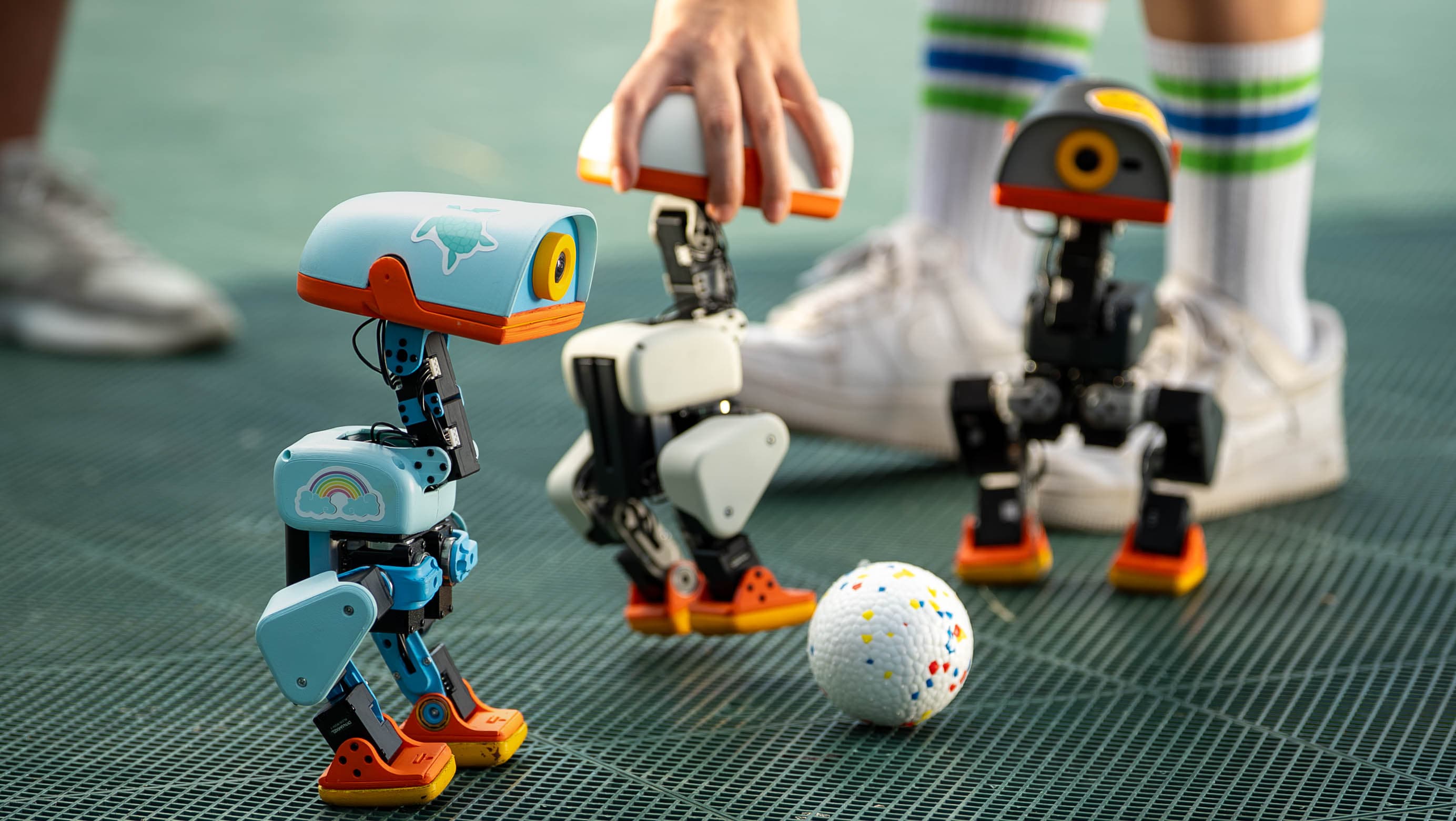
Microduck is a 25 cm programmable biped from Pollen Robotics. It ships with trained movements and a gamepad, while exposing an open-source software and simulation stack for people who want to build new behaviors.
Microduck looks most compelling as an approachable physical-AI and robotics learning platform. Included movements lower the first-use barrier, while the open-source stack creates room to go much deeper. Buyers primarily seeking practical household labor should look elsewhere.
Best fit
- Developers exploring reinforcement learning and sim-to-real robotics
- Educators who want a compact physical-AI platform
- Curious beginners who want included behaviors before they start coding
Probably not for
- Buyers expecting a general-purpose household assistant
- Anyone who needs a mature installed base and long-term reliability record
- Shoppers who need immediate delivery rather than a preorder
Price and key facts
A normalized snapshot with evidence attached.
These fields use the same structure across every HomeRobotHQ profile. Each value is linked to its evidence, classified transparently, or marked as not published.
- Connectivity
- Included behaviors work locally; Wi-Fi and Bluetooth support development HomeRobotHQ classification · Checked Open evidence ↗
- Documented runtime
- Not published by manufacturer Not published · Checked
Additional documented facts
Price, delivery timing, taxes, shipping, and regional availability can change. Verify the current official listing or status source before making a purchase decision. View the reviewed price history →
Capabilities and limits
What can Microduck actually do?
The following behaviors are documented by Pollen Robotics and its official software repository.
- 01Walk, crouch, sit, kick a ball, and roll with optional wheel accessories
- 02Use an articulated beak to grasp small objects
- 03Recover to standing after a fall
- 04Run trained movement policies onboard at 50 Hz
- 05Accept gamepad control and developer-created behaviors
Important limitations
- Microduck is in preorder, so delivery timing and the size of its owner community are still developing.
- It is positioned for play and physical-AI learning, not for general household chores.
- Advanced use requires comfort with robotics software, simulation, and experimental workflows.
Software and setup
Playable first, programmable when you are ready.
The official runtime repository documents the control loop, updates, Bluetooth control, camera streaming, and sensor services.
Pollen publishes simulation and reinforcement-learning tools so developers can retrain movement policies.
Basic play uses included behaviors and a controller; creating new behaviors requires technical work.
Charge and install the removable battery.
Pair the included gamepad.
Connect Wi-Fi or Bluetooth for software tools and updates.
Use the official repository for development workflows.
Projects worth exploring
- Drive the included walking and recovery behaviors
- Explore the MuJoCo simulation
- Train or adapt a movement policy
- Experiment with the camera, depth sensor, or NFC hardware
Privacy and connectivity
Sensors in the home deserve specific questions.
The specification lists a camera, microphones, Wi-Fi, and Bluetooth, so decide where the robot will operate and who may be recorded.
The launch sources do not answer every collection or retention question; review current manufacturer account and privacy terms.
An open-source runtime improves inspectability but does not prove that every connected service remains local.
Alternatives
Compare the role before the specification.
Sources and provenance
Primary sources reviewed.
Follow the sources for the specifications, software requirements, and policies discussed above. Our editorial approach explains how evidence is used.
- Official product pageMicroduck product pageOpen source ↗
Pollen Robotics · Checked 2026-09-01
- Official storeMicroduck store listingOpen source ↗
Pollen Robotics · Checked 2026-09-01
- Official repositoryMicroduck software repositoryOpen source ↗
Pollen Robotics · Checked 2026-09-01
- Official press kitMicroduck press kitOpen source ↗
Pollen Robotics · Checked 2026-09-01